A dream has come true for me…
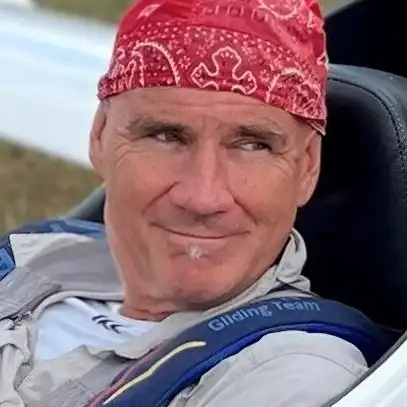
Markus Frank at the 2011 European Championships with the EB29
It’s mid-March 2011 and I’m at a training camp in St Auban when I get a call from the national coach. “Markus, can you fly the European Championships in the summer?”. What a question! I’m delighted to say yes.
The next step is to think about which aircraft I should take to the European Championships. With my Nimbus, an aircraft with which I am thoroughly familiar after over 1000 flying hours? Or should I try to get the EB29 for the European Championships in Lithuania? A phone call to Ostheim and a short time later the confirmation: “The EB29 is available to you in the summer”.
“The EB29 is available to you in summer”.
In May, I will have the opportunity to familiarise myself with the EB29. Many things, such as the engine operation, are simple and familiar, others, such as the electric chassis, are new but useful to operate. But the most important thing: “How does it feel? Will it talk to me, tell me where to centre the thermals? Will I feel at home?”.
The first take-off, at the maximum (competition) take-off weight of 850KG and with the 28.3 m wings. I immediately notice that the wings are slightly softer than those of the Nimbus, the aileron effect is better and the aircraft is very quiet.
The weather is not really great. I make my way to Heidelberg and back on my own. Unfortunately, there’s not much going on in the air, so there’s no direct comparison. However, it is difficult to find a suitable partner for the EB29 by chance, even when there is a lot of plastic flying.
What is immediately noticeable is that the high wing loading is not noticeable. The EB29 cranks cleanly and even when I find myself low in the torn thermals of the Rhön, I don’t have the idea of dropping the water ballast.
I fly my Nimbus at the German Championships in Lüsse and watch in amazement as Michael becomes German Champion with the new 25.3 metre wings. Two weeks later, I myself am on tour to Lithuania with the EB29 on the hook. I still have five possible training days before the start of the competition. As always, the weather doesn’t play ball, so I manage three more launches with a total of five hours flying time before the competition starts. This means that my flying-in phase was rather sub-optimal with a total of 17 hours and six launches.
The first scoring day
You have a luxury problem with this aeroplane: which wingspan do you choose? I opt for the 25.3 metre version, only my second take-off in this configuration. The wing is stiffer here, the aircraft is even more manoeuvrable and the wing loading is currently unrivalled in the open class.
I catch up with the English right after take-off. Peter Harvey is a three-time European champion, Steve Jones is the reigning runner-up in the world championship. Finally some mates, the direct comparison can begin. Climbing is slightly worse, which is noticeable, but it was to be expected as I have ten points more wing loading. The glide is therefore also significantly better, the EB29 can fly approx. 20 km/h faster with the same glide performance.
In the evening, the weather collapses, spreading cumulus congestus with embedded showers force us to make major detours. The Brits and I find ourselves at ant-knee height and in outlanding conditions. Peter Harvey has to fire up his turbo, I find the saving updraft and am therefore satisfied with myself and above all with the aircraft, despite my relatively poor position for the day.
The 2nd to 5th scoring day is my weather.
The EB29 and I seem to be a good team. It makes it easy for me, cloud formations despite a low base allow me to reach speeds of over 130 kilometres per hour. Lithuania is exhausted with task sizes of up to 685 kilometres, and Polish airspace is also used. I usually fly ahead of the field and always land first in the open class. The 2nd – 1st – 1st – 3rd places on the day put me at the head of the field with over 200 points. Forget the 250 points I had to “leave behind” on the first day of the competition.
Then, after the rest day, the weather changes. The forecast is for 8/8 coverage, with thermals remaining under the canopy. In the morning I decide in favour of the “long ears” (wingspan 29.3 m). The wing loading is still 51 kg/m², which is unrivalled in this class.
Shortly after take-off, it turns out that this was the right decision today. After 5-6 thermals, Bruno in his Nimeta and I are the two stretching kings at the top of the thermal.
We fly off through the grey.
Bruno pulls what he calls a 6 in the lottery near the ground. He cranks 3 m/s out of nowhere. By the time I get there, he is already at the top of the airspace restriction area, the thermal is no longer pulling properly and the English can overtake me. I am the lowest in the thermal, but again it only takes 2thermals and I can see Peter, Kim and Steve from above, circle in front of them and glide into the rebuilding weather.
Bruno is already ahead and just below final glide altitude. But in front of me, just off course, the first cones appear again, the diversions brings a good climb and I can easily reach my final approach altitude.
Bruno has the honour of being the first to fly over, and thanks to a later take-off I have the day’s victory even with the “big ears”.
The remaining days are characterised by the nastiness of the weather. Showers, waves before take-off (unfortunately not for me), shielding. Outlanding rates of over 50% speak for the difficulties. But I can rely on the 28.3 metre version. I’m always among the best at climbing, and with the high wing loading I can also score points in pre-flight without having to risk too much.
The non-plus-ultra in the open class
The self-confidence in me and the EB29 is there, and the two things are logically connected. And when the last day is over, I and the EB29 are actually European champions.
A dream has come true for me, a large part of course also thanks to the aeroplane. The “Binders” are to be congratulated for this aeroplane, which for me is currently the non-plus-ultra in the open class.